Digital Inequality: Is Remote Working a Tool for Inclusion or Isolation?
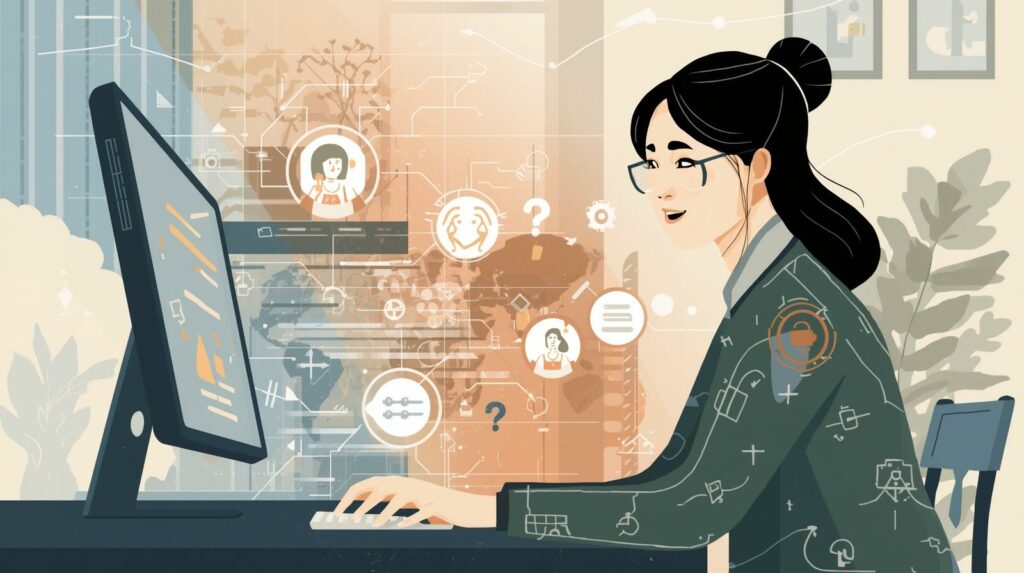
An analysis of the housing and technological disparities that create unequal access to remote working
At the beginning of the great work revolution of 2020, there was a moment when we deluded ourselves. Perhaps with a touch of naivety, we believed that smart working (or agile working, for purists) was the great social equaliser of our time. There would be no more stressful commuting, toxic presenteeism would be a thing of the past, and opportunities would be democratised: all you needed was an internet connection and you could work from a medieval village or the centre of Milan with the same efficiency.
On paper, it seemed like the utopia of flexibility. However, a few years on, with the novelty worn off and the emergency over, the sociology of work presents a much more complex picture. Through the lens of DE&I (diversity, equity and inclusion), we can see that remote working has not eliminated inequalities; in many cases, it has simply shifted them from the office to the living room and often amplified them.
The problem is that we have confused equality (providing everyone with a laptop) with equity (ensuring everyone has the means to use it to its full potential). This raises the uncomfortable question: is smart working really a tool for inclusion, or is it becoming a new factor of social segregation?
The sociology of space: ‘A Room of One’s Own’
To understand the root of digital inequality, we need to start with the basics. Virginia Woolf wrote that, in order to create, one needs ‘a room of one’s own’. Today, we could paraphrase this by saying that, to make a call on Teams without going crazy, you need a door that closes, at the very least. This is not a trivial detail; it is a class privilege.
The traditional office, with all its flaws, performed a fundamental democratic function in that it levelled the physical space. Once inside, interns and executives shared the same air conditioning system, ultra-fast fibre optic connection, ergonomic chairs and silence or background noise. The working environment was, in a sense, neutral.
However, by moving work into private homes, we have exacerbated socio-economic disparities. Those who own a large house, perhaps with a dedicated study, have experienced remote working as liberating. They have gained time, concentration and wellbeing. However, for those living in shared apartments, cramped one-bedroom flats or noisy suburbs, the home office has become a trap.
Let’s consider two colleagues in the same role. The first works from a quiet, well-lit room with a large desk. The second works from the kitchen table, perhaps sharing the space with a roommate or children doing their homework. They are forced to keep the camera off so as not to show the mess or family members passing by and have to work with headphones on to isolate themselves from the domestic chaos.
The first person will appear professional, rested and productive. Despite putting in the same effort, the second will struggle with double the cognitive stress. This housing disparity creates an ‘invisible inequality’ that impacts productivity and, in the long term, career opportunities. We may be in the same storm, but some of us are on equipped yachts while others are on makeshift rafts.
The digital divide: not just a question of fibre
Alongside the housing divide, there is the technological divide. We’re not just talking about download speeds. The modern digital divide is more subtle. Of course, there are still areas in Italy where the connection is unstable, which disadvantages those who have chosen (or been forced) to live far from large urban centres. However, technological inequality also concerns hardware and digital literacy.
Many companies have adopted BYOD (Bring Your Own Device) policies or provided standard equipment that does not cater for different needs. Those with an old laptop or small monitor, or who cannot afford an ergonomic chair, are at a disadvantage.
Additionally, a generational aspect is often overlooked. Digital natives may find it natural to manage ten collaboration platforms simultaneously, but more senior workers, who may have excelled in face-to-face interpersonal relationships, can find the mediation of the screen to be a barrier to effectiveness and inclusion. If companies do not invest in digital training, they risk marginalising valuable talent simply because they are less ‘agile’ with new interfaces.
The paradox of inclusion: visibility and isolation
From a DE&I perspective, remote working is also a double-edged sword for underrepresented groups.
On the one hand, remote working has been a blessing for people with physical disabilities or neurodiversities that make the office environment overstimulating; it has broken down insurmountable physical barriers and is a real accessibility tool.
However, on the other hand, it risks creating new ghettos. There is a phenomenon known as proximity bias: managers tend to favour, promote and assign better projects to people they can see in person. If women (who are still statistically the main caregivers in Italy) or minorities choose remote work more often than white, heterosexual men in order to better manage the complexities of their private lives, we risk going backwards by decades. The physical office could become a ‘boys’ club’ again, where real decisions are made, while those working from home could become second-class workers and invisible executors.
Furthermore, smart working can dilute the sense of belonging and corporate culture that are fundamental to inclusion. For a young new recruit from a disadvantaged background, the office is also a place of social learning, informal mentoring and professional networking. Taking away this opportunity means taking away social mobility. Without coffee at the machine or lunch with a senior colleague, the transfer of know-how slows down and networks become impoverished.
Towards a conscious approach: from equality to equity
So, should smart working be scrapped? Absolutely not. It is a civilisational achievement that should not be lost. However, it must be governed from a sociological and inclusive perspective.
Companies that take diversity, equity and inclusion (DE&I) seriously must stop viewing remote work as a simple concession of time and start designing it as an ecosystem.
What does this mean in practice?
It means moving from equality to equity. Simply saying, “You can work from home two days a week” is not enough. We need to ask ourselves how our employees work from home.
- Financial support for home infrastructure: Companies should provide bonuses to cover the costs of ergonomic equipment, monitors and high-speed internet. This is not charity; it is a guarantee of equal employment opportunities.
- Access to co-working spaces: For those without a suitable home workspace, companies could offer subscriptions to local co-working spaces. This solves the problems of space and isolation while maintaining flexibility.
- Combat proximity bias: Train managers to evaluate performance based on objectives rather than presence. Create opportunities for ‘hybrid’ interaction that do not penalise remote workers. If a meeting is hybrid, the golden rule should be ‘either everyone in person or everyone virtually’ to prevent those in the meeting room from dominating the conversation.
- Right to disconnect: The most vulnerable groups struggle the most to set boundaries. Without a strict culture of disconnection, smart working can lead to burnout, which disproportionately affects women and carers.
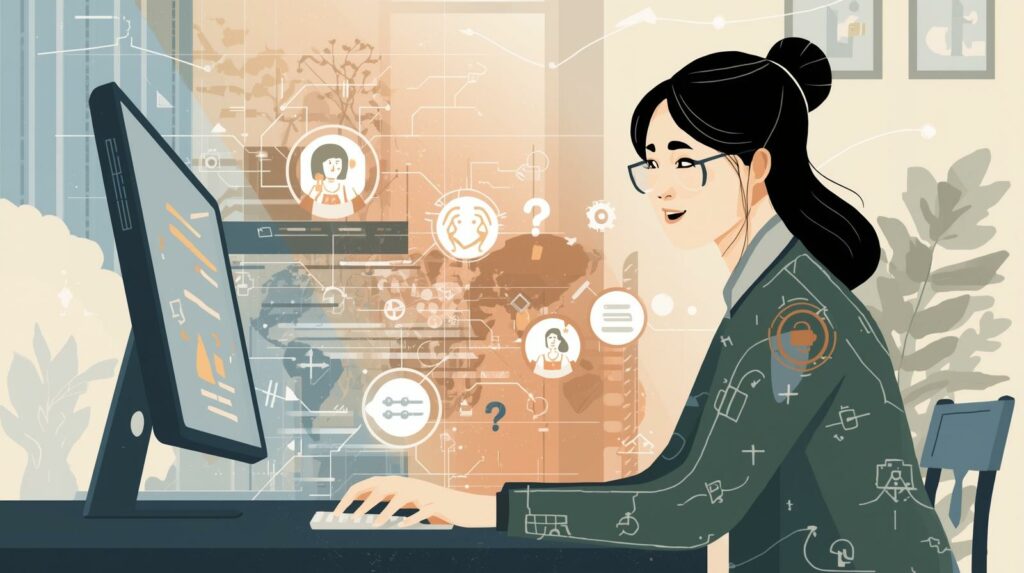
Technology is never neutral; it takes the shape of the society that uses it. Smart working has the potential to be the greatest tool for workplace inclusion of the century, allowing geographically or physically disadvantaged talent to access the job market. However, if left unchecked, it risks becoming a distorting mirror that magnifies existing social divisions.
Today’s HR departments and leaders must ensure that the choice to work remotely is truly free, and not a sentence to invisibility or precarious housing. Only by addressing the ‘where’ and the ‘how’ can we truly make work ‘smart’ and, above all, human.