The Taboo of Menopause and Invisible Health: Changing Bodies in Static Organisations
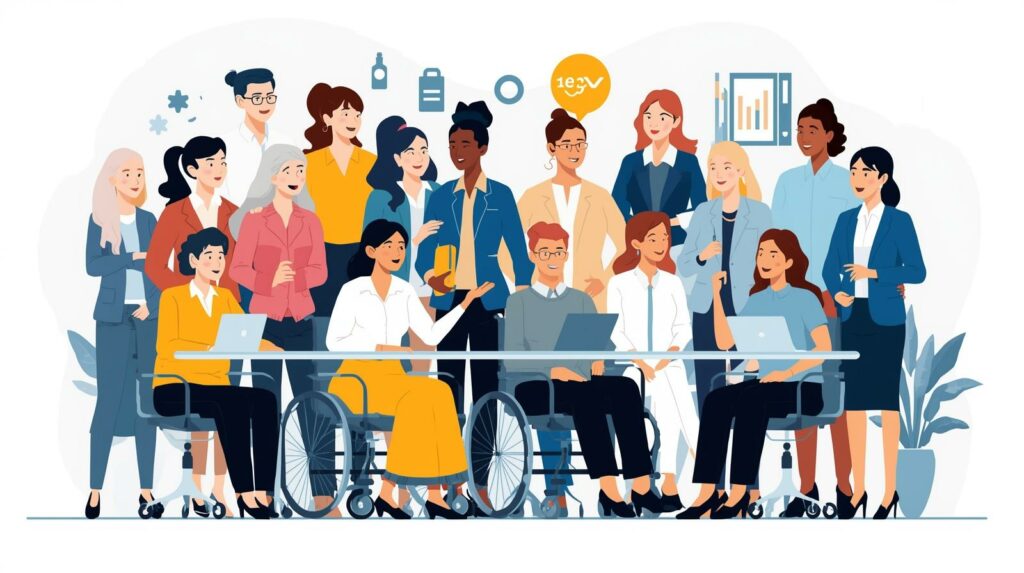
Menopause remains a corporate taboo, clashing with rigid work structures designed for men. This analysis connects ageism with biology, proposing “biological DE&I” strategies to support invisible health needs effectively.
When we imagine the model employee, most likely, we figure them with constant energy, always available and without mood swings. Their body functions like a Swiss machine: silent, efficient and linear.
Now let’s imagine a body breaking out in a hot flush so much that their glasses fog up (true story) during a budget meeting or experiencing another kind of fog: the cognitive one, that makes it impossible to remember a simple piece of data. In an instant, the illusion of the ‘ideal worker’ is shattered.
It’s almost 2026, and companies rightly talk about everything: sexual orientation, gender identity and neurodiversity. Yet there is a blind spot: the biology of female ageing and invisible health, a giant elephant in the room that DE&I still struggles to address. In particular, the taboo surrounding menopause.
The architecture of the standard man
Why is menopause a corporate issue and not just a private matter? The sociology of work offers a straightforward yet stark answer: our organisations have been designed around the male body, ideally aged between 25 and 50.
Desks, chairs and, above all, office temperatures and working hours (the infamous eight consecutive hours) are calibrated to a physiology that does not allow for cyclicality. The organisation is ‘static’, rigid and built on the myth of linear productivity. The human body, especially the female body undergoing hormonal transitions, is dynamic and fluctuating. When these two worlds collide, it is always the body that suffers, forced to adapt to a hostile environment.
Ageism and sexism: the perfect storm
This is where the lethal intersection of ageism (discrimination based on age) and sexism comes into play. Menopause is not just a biological event; it is also a social marker. In our culture, which fetishises youth and fertility, entering menopause marks the beginning of a ‘grey area’ for many women.
While an ageing man gains authority (grey hair is seen as a symbol of wisdom, and he is referred to as a ‘silver fox’), an ageing woman risks becoming ‘invisible’ or, worse, ‘unmanageable’. Hot flushes and emotional instability are dismissed as jokes or used to portray the professional as unreliable or hysterical.
Usually the outcome is silence. Millions of female workers suffer quietly, hide their symptoms or even leave their jobs (a phenomenon known as the ‘menopause drain’), thereby taking with them years of experience and expertise rather than admitting to a ‘weakness’ that is, in reality, just physiology.
The dictatorship of ‘good health’
This discourse extends to the entire sphere of invisible health issues, such as endometriosis, chronic pain and autoimmune diseases. We live in a corporate culture that rewards being present and performing well. Admitting that your body does not function according to industrial standards is seen as a breach of the employment contract.
This creates a form of exhausting ’emotional labour’: the fatigue of having to ‘perform well-being’ when you are unwell; the exhaustion of having to smile and appear energetic so as not to lose social status or career opportunities.
Towards biological DE&I
So, what does true inclusion mean in this regard? A corporate yoga class or health webinar is not enough. We need to deconstruct the idea that employees are disembodied brains floating around the office.
Including menopause and invisible health issues in DE&I means:
- Normalising the language: talking about it openly takes away the power of stigma.
- Radical flexibility: introducing non-linear schedules and remote working as a tool for managing energy, not as a ‘favour’.
- Environmental adaptation: includes uniforms made of breathable fabrics, temperature control in offices and easier access to restrooms.
Rather than asking bodies to adapt to outdated structures, companies must start adapting structures to people’s biological realities. After all, ageing and change are not bugs in the system; they are the only certainties we have. Ignoring this is not only unfair, it’s bad business.