Designing change: a workplace that respects people with autism
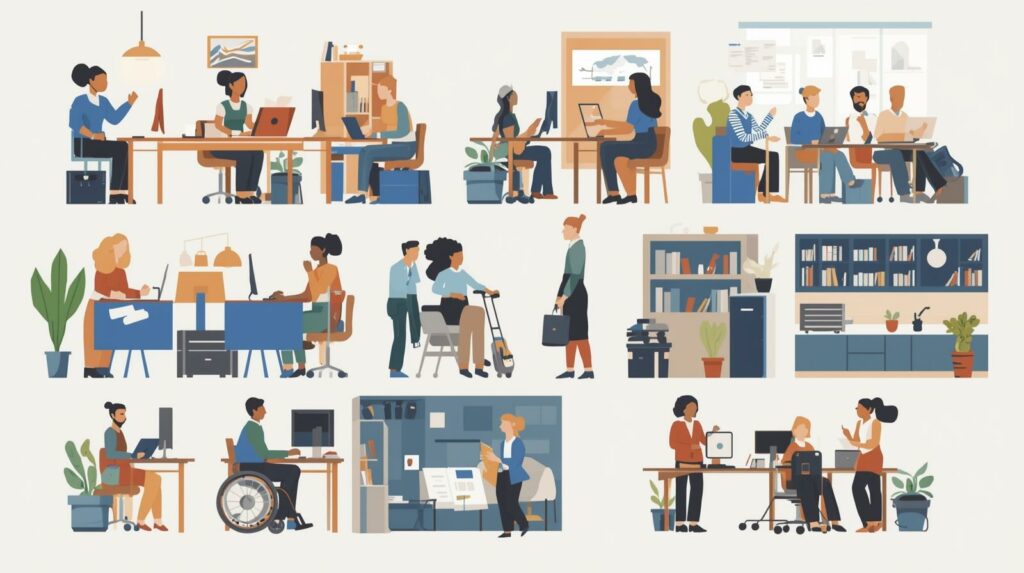
Workplace changes like restructuring or menu updates can destabilize employees with autism who depend on predictable environments. Authentic DEI requires “designing change” through advance communication, visual aids, fixed workstation options, sensory refuges, and predictable menus. These universal design principles reduce anxiety and improve concentration for all employees, demonstrating that genuine inclusion is built into physical structures and processes, not just symbolic gestures.
In the fast-paced world of business, the only constant is change. From restructuring offices and introducing hot-desking to changing the cafeteria menu, these transformations are often presented as inevitable and positive improvements for everyone. But is this really the case?
From a sociological perspective, our workspaces are cultural artefacts designed around a model of the ‘standard’ worker, often without our realising it. This model assumes a certain tolerance for noise, novelty and unpredictability. However, for a person with autism, a predictable environment and stable routine are essential tools for managing cognitive energy and sensory regulation, not just preferences.
When the work environment changes without warning or adequate preparation, the impact can be truly destabilising. This is not ‘resistance to change’, but a legitimate reaction to the removal of reference points that provide stability and focus. Therefore, a company that truly embraces the principles of diversity, equity and inclusion (DEI) must learn to ‘design change’, making it a more accessible and less traumatic process.
Applying equity in practice: anticipating, communicating and adapting
Let’s look at how we can apply a DEI perspective to the most common physical changes in an office, transforming potential sources of stress into opportunities for inclusion.
1. Renovating the premises: beyond glossy renderings
Announcing an office redesign can cause anxiety. The prospect of noise, dust, strangers and, ultimately, a completely new and unfamiliar environment can be highly stressful.
The inclusive approach: communication is key. Sending a generic email is not enough.
Anticipation and visualisation: Provide detailed maps of the new layout, 3D renderings and, if possible, samples of the new materials, such as carpet types or wall colours. This helps create familiarity with the space even before it exists.
– Detailed timelines: Create a precise, visual calendar of the work. For example, “From day X to day Y, area Z will be inaccessible due to noise”. This predictability enables everyone to prepare mentally and organise alternative strategies.
– Sensory refuges: During construction, ensure access to ‘quiet zones’ or temporary offices away from the chaos. Offering maximum remote working options during the most disruptive phases is a fundamental gesture of fairness.
2. New desks and layouts: the danger of forced ‘flexibility’
The trend towards open spaces and hot desking can be a nightmare for those who need control over their microenvironment. Losing one’s workstation means losing a point of reference: a personalised, sensorially optimised place.
The inclusive approach: flexibility cannot be imposed on everyone in the same way.
Fixed workstations should be made available as an option to ensure that those who need them can keep a fixed desk. This is not a privilege, but a reasonable adjustment that enables productivity to be maintained.
– Personal space design: If introducing new desks, consider models that offer a minimum of privacy, such as taller dividers or side panels that reduce visual distractions.
– Control over the environment: This involves allowing individuals to control elements such as desk lighting (warm, dimmable lamps are preferable to neon lights) and proximity to windows or sources of noise. Involving people in choosing their workstation is a basic act of inclusion.
3. The company cafeteria: when food becomes routine
Even seemingly minor changes, such as variations in the cafeteria menu, can cause problems. For many people with autism, food is linked to routines and specific sensory sensitivities (texture, smell and taste). Unpredictability regarding what will be served for lunch adds an extra cognitive load to the day.
The inclusive approach: predictability and clarity.
– A guaranteed ‘standard’ menu: alongside daily specials, always offer a few simple and predictable options. Having a ‘basic menu’ that can be relied on every day drastically reduces anxiety.
Clear communication is also key: publish the weekly menu online well in advance, including a detailed list of ingredients for each dish. This allows for advance planning.
Consider the sensory environment of the cafeteria, which is often chaotic and noisy. Creating smaller, secluded areas with better acoustics can transform the lunch break from an exhausting experience into a rejuvenating one.
These strategies are not ‘favours’ granted to a few, but concrete examples of universal design — an approach that creates better environments for everyone. Clear communication about company changes reduces anxiety for the entire team. Offices with better acoustics and lighting help everyone concentrate better. A predictable menu is convenient for everyone.
Authentic inclusion is not measured by posters on the wall, but by the attention built into physical structures and everyday processes. When planning for change, we should ask not “How will they adapt?”, but “How can we design this change so that no one is left behind?”. Finding the answer to this question is key to creating a truly equitable and inclusive workplace.